Brewing
Cold Brew at Home: Ratios, Time, and Troubleshooting
November 6, 2026 · 6 min read
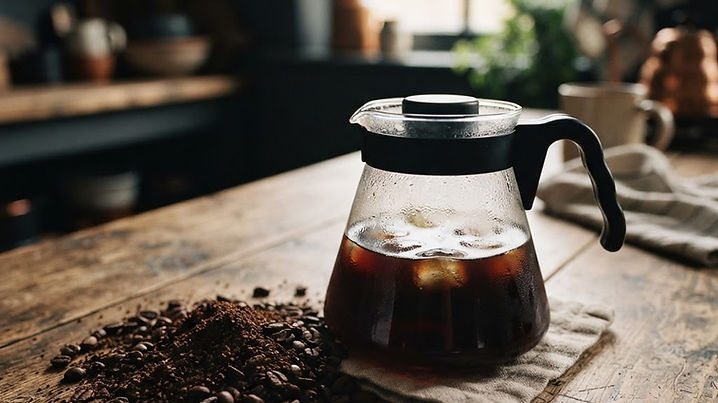
To make cold brew, combine coarse coffee grounds with cold water at a 1:5 ratio by weight, then let it steep for 16 to 24 hours before filtering. Unlike iced coffee, which is hot-brewed and then chilled, cold brew uses time instead of heat to extract flavors, resulting in a lower-acid profile. Understanding how to make cold brew requires patience and attention to your specific brewing variables. At Northwood Roast, we emphasize that consistent results depend on measuring your inputs rather than guessing.
Understanding the Difference: Cold Brew vs Iced Coffee
Many people confuse cold brew vs iced coffee, but the chemistry is entirely different. Iced coffee is essentially hot-brewed coffee that has been poured over ice or cooled down. This rapid cooling often locks in the high acidity and sharp, bright notes characteristic of hot extraction. Because it is brewed hot, the process takes minutes, not hours. Cold brew, by contrast, relies on long-term immersion. The lower temperature of the water prevents certain oils and fatty acids from extracting, which creates a smooth, chocolatey, and mellow cup that is often described as having lower perceived acidity. While some users report that cold brew sits better in their stomach, any health claims regarding acidity levels should be discussed with a medical professional. Cold brew is a concentrate, meaning you need to dilute it with water or milk before drinking. Iced coffee is typically ready to consume as soon as it passes through the filter. When you Shop Northwood Roast coffee, consider using our darker roasts, which perform exceptionally well in long immersion steeps because their bold profile stands up well to the dilution process.
The Ideal Cold Brew Ratio
Precision is the bedrock of good coffee. The standard cold brew ratio is 1:5, meaning one part coffee by weight to five parts water by weight. If you use 200 grams of coffee, you need 1,000 grams of cold, filtered water. This ratio creates a strong concentrate that allows you to control the strength in your final glass. If you prefer a lighter body, you can shift the ratio toward 1:6 or 1:7. Using a scale is mandatory for repeatability. If you do not have a scale, you might aim for a volume ratio of 1 cup of beans to 4 cups of water, but be aware that different roast levels have different densities, which makes volume measurements inconsistent. If your final concentrate tastes too watery, increase your coffee next time or use a tighter 1:4 ratio. Always use filtered water; since water makes up 80% to 90% of your beverage, its quality impacts the flavor profile significantly. Avoid using tap water that has a strong chlorine scent or mineral hardness, as these flavors will be amplified by the long immersion time, creating a muddied, unpleasant finish in your brew.
Mastering Grind Size and Steep Time
For cold brew, the grind size is a coarse, breadcrumb-like texture. If you grind too fine, the coffee will become difficult to filter and the flavor will likely turn muddy, gritty, and bitter. A burr grinder is essential for achieving a uniform particle size, which ensures even extraction. The standard cold brew time ranges from 16 to 24 hours. A 16-hour steep is usually the "sweet spot" for a balanced, sweet concentrate. If you leave the coffee for 24 hours or longer, you risk extracting bitter, woody compounds that can ruin the taste. You can conduct your steep either on the kitchen counter at room temperature or in the refrigerator. Room temperature steeping generally extracts faster and produces a slightly more complex flavor profile, while refrigerator steeping is safer if you have a warm kitchen. Regardless of where you keep it, keep the vessel covered to prevent the coffee from absorbing the ambient odors of your refrigerator or pantry. When the timer hits the 18-hour mark, take a small sample with a spoon to gauge the strength. If it tastes right, stop the process immediately to avoid over-extraction.
The Filtration and Storage Process
Filtering is the most tedious part of the process, but it is necessary for a clean, non-gritty cup. Start by pouring the coffee through a fine-mesh metal sieve to catch the bulk of the grounds. Once the liquid is mostly clear of sludge, pour it through a paper filter or a clean cheesecloth placed inside a funnel. This secondary filtration is crucial for removing the "fines" that settle at the bottom of the container. Once filtered, your cold brew concentrate can be stored in a sealed glass bottle in the refrigerator. It will typically stay fresh for up to two weeks, though the flavor begins to degrade after seven days as oxidation sets in. Keep the container airtight to minimize this oxidation. When you are ready to serve, treat the concentrate as a base. A common serving ratio is 1:1, meaning one part concentrate to one part water or milk. You can adjust this ratio based on your preference for intensity. Serve it over clear, hard ice cubes to ensure the drink does not water down too quickly while you enjoy it on a warm afternoon.
Troubleshooting: Bitter or Weak Batches
A bitter batch is almost always the result of over-extraction, which is usually caused by steeping for too long or using a grind that is too fine. If your batch tastes harsh and astringent, reduce your steep time by two to four hours on your next attempt. Alternatively, ensure that you are not squeezing the filter or cheesecloth during the filtration process; squeezing pushes bitter plant fibers into your clean concentrate. If your batch is weak, first check your scale. If the ratio was accurate at 1:5, then you may need to steep longer or use a darker roast that extracts more readily. If you are using a very light roast, consider moving to a 1:4 ratio to increase the concentration of soluble solids. If the coffee tastes "flat" or "sour," it is likely under-extracted, meaning the water did not pull enough flavor from the grounds. In this case, slightly decrease your grind size or increase your total steep time by an hour. If you need reliable, freshly roasted beans to start your next batch, Shop Northwood Roast coffee for options that excel in long-steep immersion brewing.
Frequently asked questions
Should I use hot or cold water to start my cold brew?
Always use cold, filtered water for your base. While some methods suggest a "bloom" with a small amount of hot water to start, true cold brew relies on a steady, low-temperature extraction to maintain its smooth profile. Starting with hot water will change the extraction rate and lead to the higher acidity found in hot-brewed coffee.
How can I make my cold brew less caffeinated?
Cold brew is naturally high in caffeine because the long immersion time pulls out more caffeine than a quick hot brew. To lower the caffeine content in your glass, simply dilute the final concentrate with more water or milk. There is no simple way to selectively extract less caffeine from the grounds during the steeping process itself.
Is it safe to leave my cold brew out on the counter?
Yes, it is perfectly safe to steep your coffee at room temperature for the recommended 16 to 24 hours. The acidity of the coffee and the exclusion of oxygen in a sealed container make it a stable environment. However, once you have filtered the grounds out, you must transfer the concentrate to the refrigerator for storage.